If you are buying in Greater Boston and you have not locked in a town yet, you are really choosing between two bands: the closer-in suburbs that ring the city, and the South Shore towns that run down the coast and the Route 3 corridor. The short answer is that the closer-in suburbs buy you proximity and the South Shore buys you square footage, land, and in many towns a shorter list of competing offers. Which one is right depends less on the towns themselves and more on how many days a week you actually commute, how much house you need, and how long you plan to stay.
That last one matters more than most buyers expect. The two bands have not been moving in the same direction lately, and a decision that looks obvious on a Saturday tour can look different once you run it out five or ten years.
Who this applies to
This is the couple pre-approved for a number that buys a three-bedroom in Milton or a four-bedroom with a yard in Hanover. It is the family in Southie who has outgrown the condo and is deciding whether to stay close in or go south. It is the hybrid worker who commutes twice a week and is wondering how much that changes the math. It is the empty nester deciding whether to stay near the grandkids in Needham or trade down into something coastal.
If your job requires you downtown five days a week and your budget is generous, this decision is simpler than it looks. For everyone else, and that is most people now, it is a real trade-off with real money on both sides.
What people actually mean by each
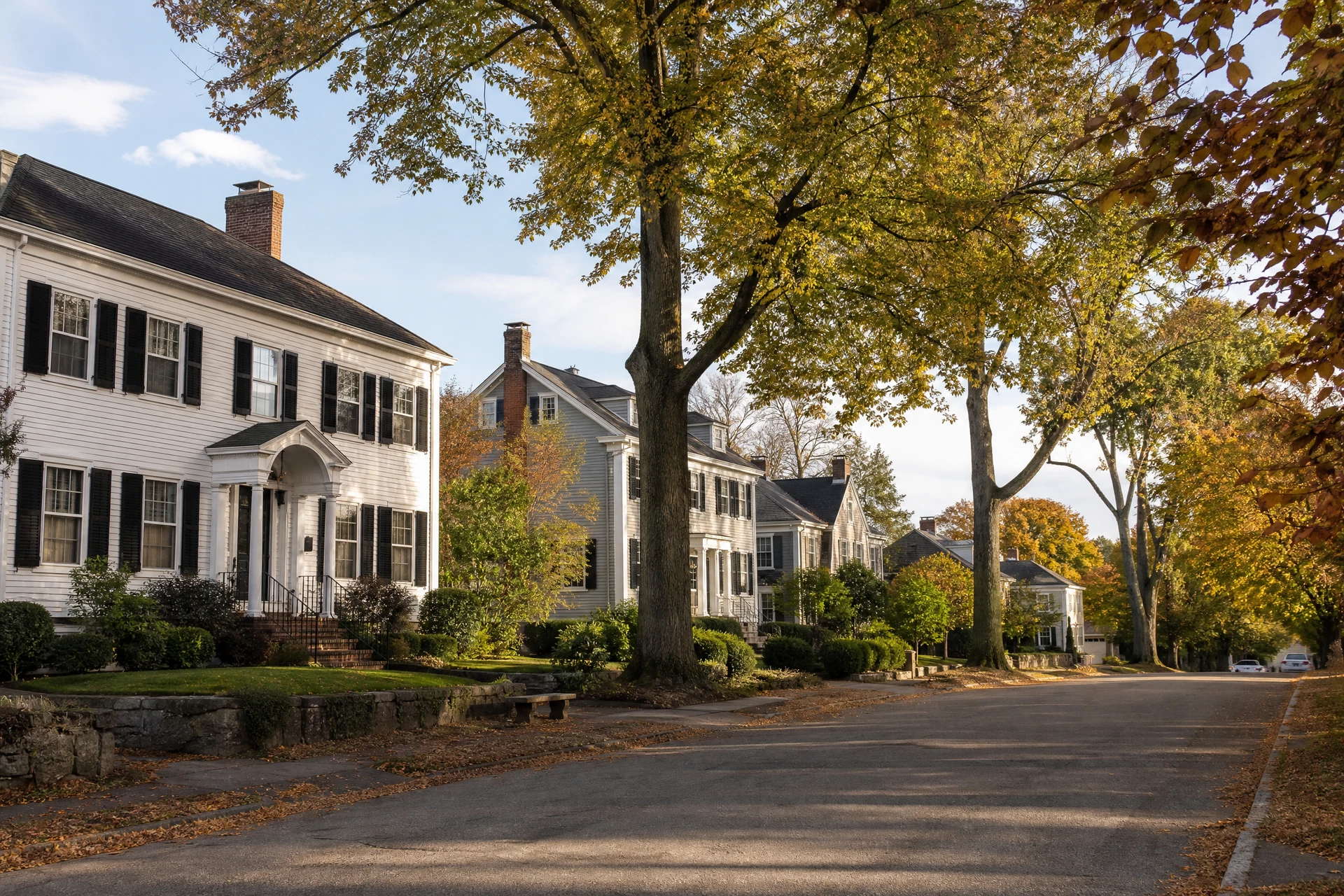
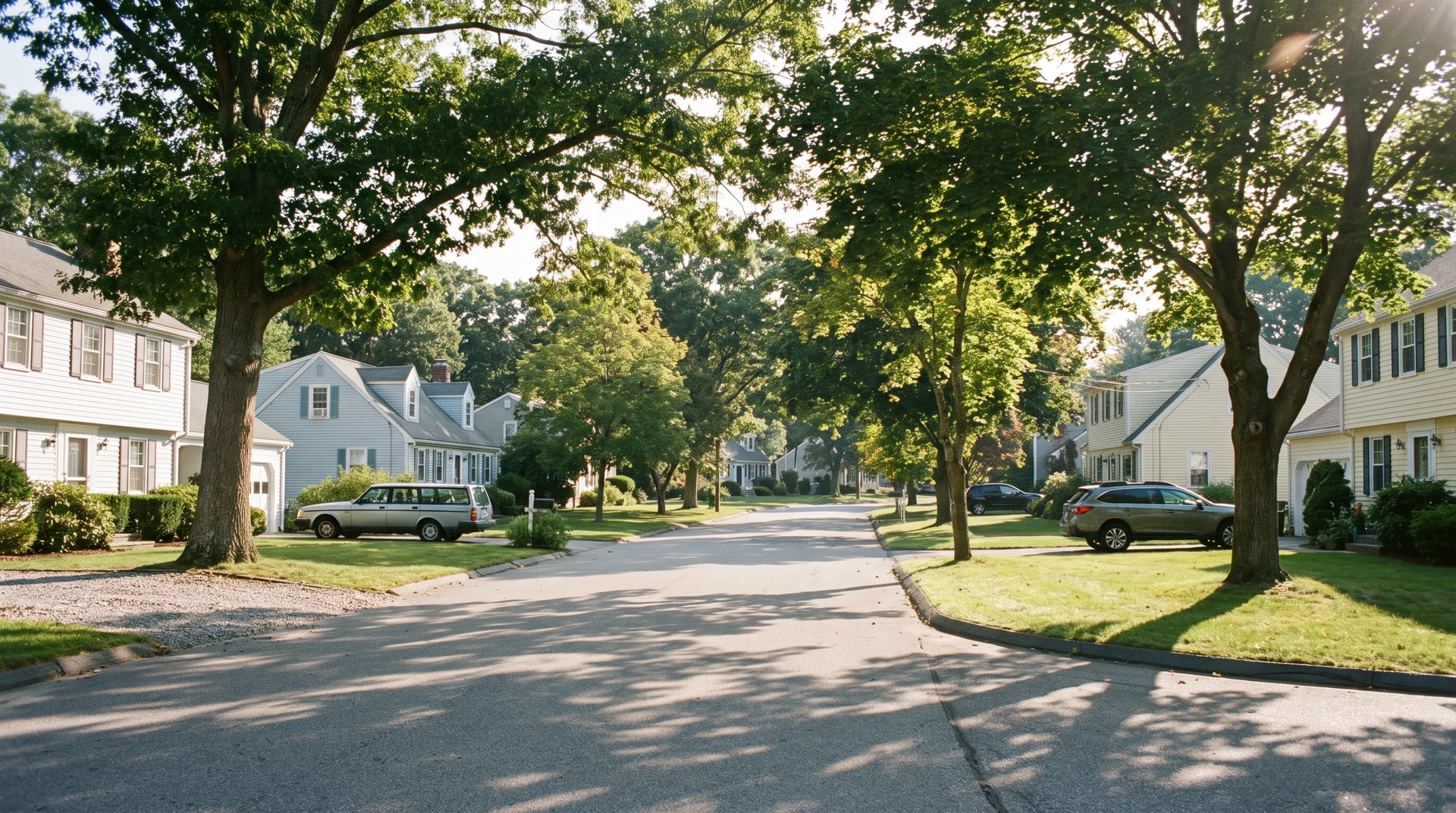
Closer-in suburbs generally means the ring that touches or nearly touches Boston: Milton, Dedham, Needham, Newton, Brookline, Belmont, Arlington, Watertown, and their neighbors. You are typically inside a twenty to thirty-five minute drive of downtown outside of rush hour, on or near a rapid transit line or a short commuter rail run, and you are buying an older, smaller house on a smaller lot at a higher price per square foot.
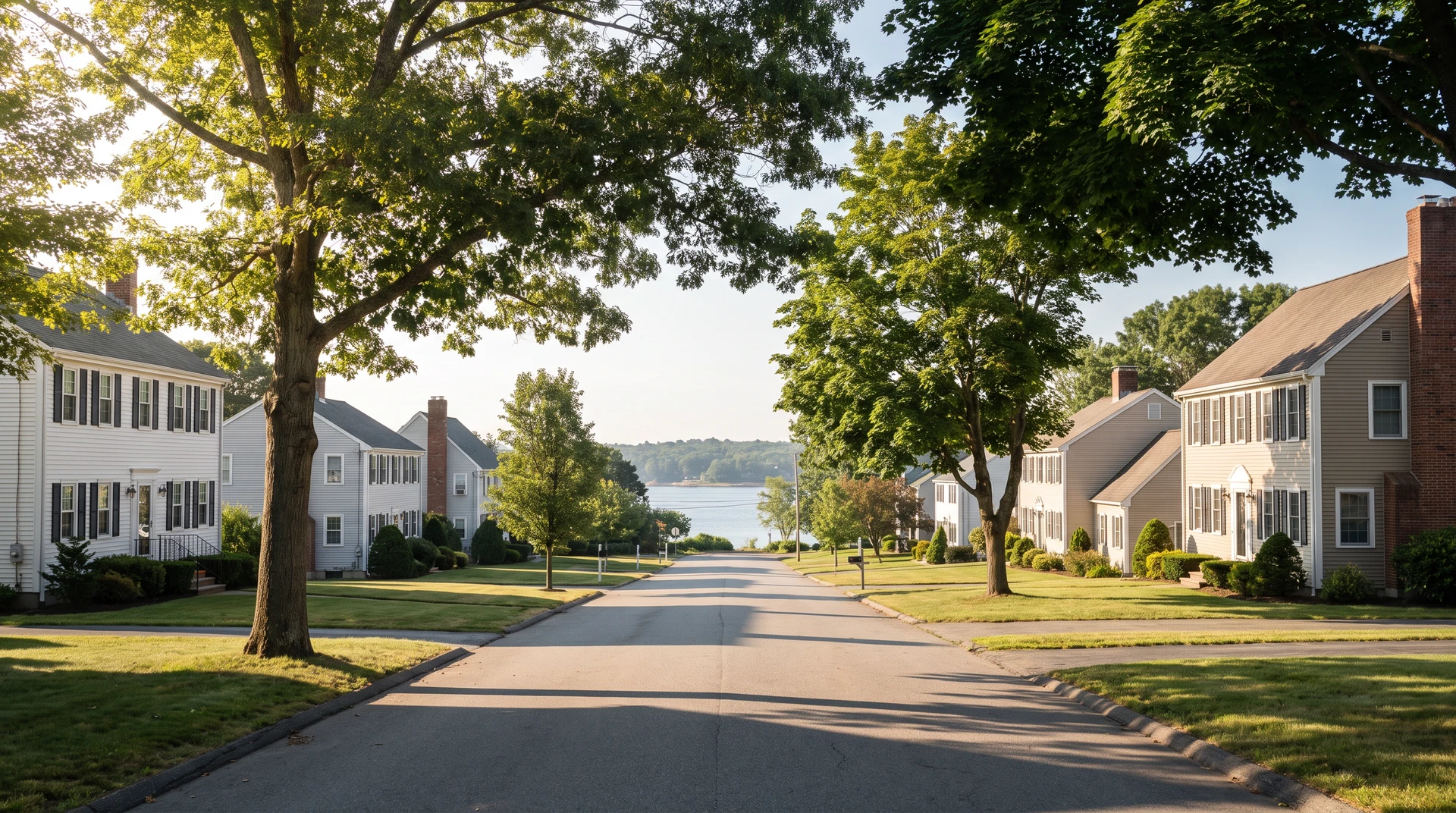
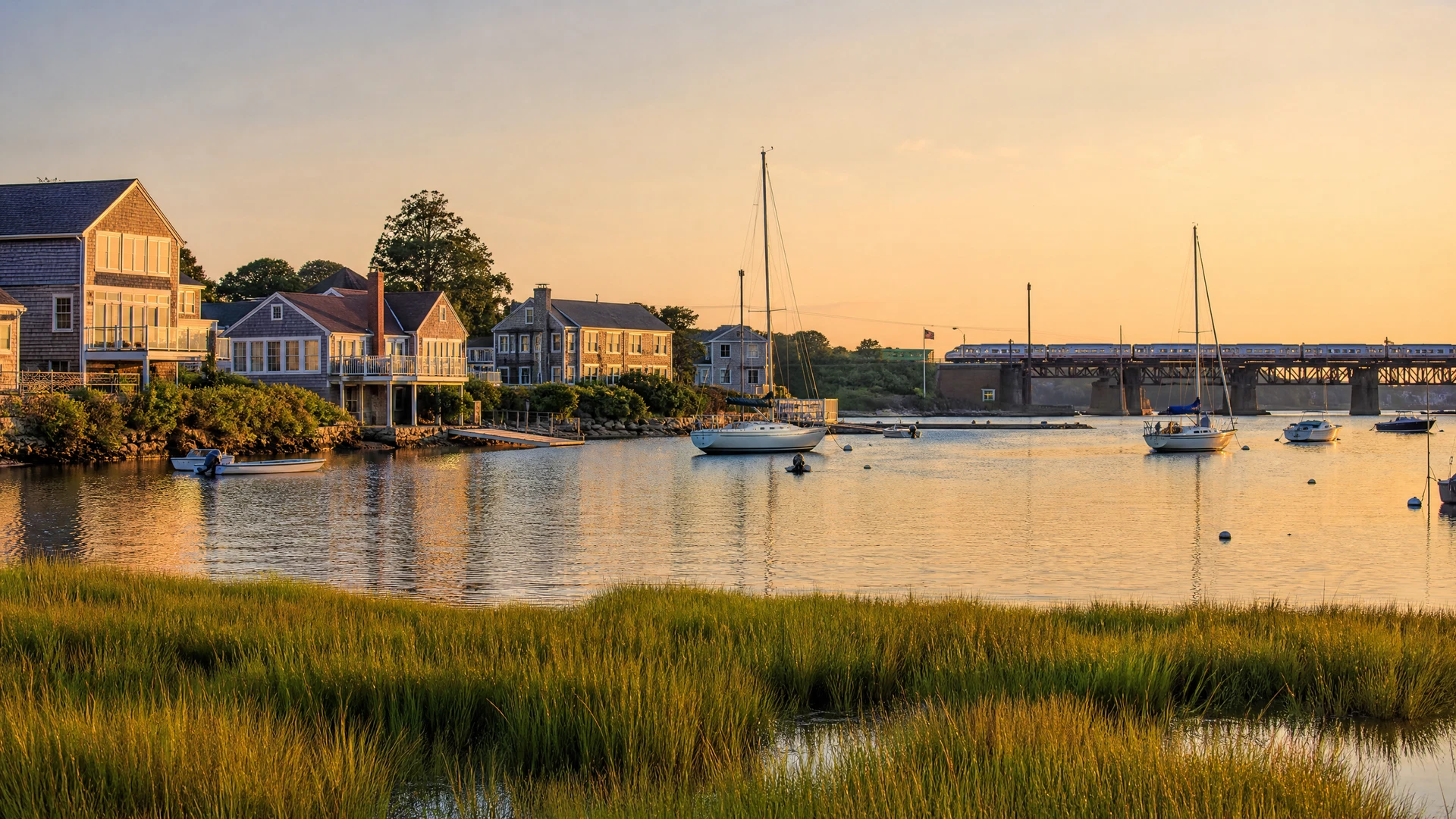
South Shore generally means Quincy, Braintree, Weymouth, Hingham, Cohasset, Scituate, Norwell, Hanover, Duxbury, Marshfield, and the towns further down toward Plymouth. You get more land, newer or larger housing stock in many of the towns, water in some of them, and a commute that runs longer but is often more predictable because you are riding a train rather than sitting on the expressway.
The line between the two is blurry, and that is where the opportunity usually is. Quincy and Braintree sit in both worlds. They are South Shore towns with Red Line service, which is why they behave differently from towns just a few miles further out.
What the 2026 market is actually doing
This is the part most buyers have not caught up to yet, and it should be read as a trend rather than a fixed number.
For the last several years the working assumption was that closer in wins. Recent year-over-year data across the region has been telling a more segmented story. The inner walkable core, meaning the Cambridge, Somerville, and Brookline band, has been giving ground on median sale price, while the South Shore has been posting strong double-digit gains. A year earlier those rankings were reversed. Single-family inventory in the inner ring has not kept pace with household formation since 2022, which keeps prices high, but the buyer pool for a $1.5 million older colonial in a walkable inner suburb is thinner than it was when rates were near 3%.
Meanwhile the South Shore has been absorbing inventory quickly, and days on market in the strongest towns has been running under the regional average. That is a competitive market, not a discount market. The South Shore is not where you go to find a bargain in 2026. It is where the demand has been moving.
The practical read: the closer-in suburbs are where you may find more negotiating room right now, especially above the $1.5 million line and on homes that need work. The South Shore is where you should expect to compete, and where you should not assume that going further out automatically buys you leverage.
The comparison, honestly
| What you are weighing | Closer-in suburbs | South Shore |
|---|---|---|
| What your budget buys | Less square footage, smaller lot, older housing stock, higher price per square foot | More square footage, more land, more newer construction, more variety by town |
| Commute | Rapid transit or a short rail run, 20 to 35 minutes off-peak by car, but expressway traffic is unforgiving at rush hour | Red Line from Quincy or Braintree, or Old Colony commuter rail. Longer door to door, generally more predictable |
| Competition right now | More room to negotiate in spots, especially at higher price points and on homes needing work | Expect to compete. Inventory has been moving quickly in the strong towns |
| Property taxes | Rates vary widely by town and mean little without the assessment behind them | Same. Compare actual annual bills on comparable homes, not rate cards |
| Lifestyle | Walkability, restaurants, closer to the city and the airport, shorter trips to Boston hospitals and universities | Beaches, harbors, boating, more yard, more town-centered social life |
| Resale considerations | Deep long-term demand, but recent softness in the walkable core is real | Strong recent demand, and more exposure to coastal insurance and flood costs in the waterfront towns |
The commute question, answered properly
Buyers consistently get this wrong in the same two ways.
The first mistake is comparing driving times at 11am on a Sunday. The Southeast Expressway at 7:45am is a different road than the one you toured on. If you are going to be in an office on a schedule, drive the actual route at the actual time, twice, before you write an offer.
The second mistake is ignoring the train. Three commuter rail lines run out of South Station through this part of the region, and they are worth knowing by name because buyers mix them up constantly.
The Greenbush line runs from South Station through JFK/UMass and Quincy Center, then out to Weymouth Landing/East Braintree, East Weymouth, West Hingham, Nantasket Junction, Cohasset, North Scituate, and Greenbush. The full run to the end of the line takes just under an hour. This is the line for Hingham, Cohasset, and Scituate.
The Kingston/Plymouth line runs from South Station through JFK/UMass, Quincy Center, and Braintree, then out to South Weymouth, Abington, Whitman, Hanson, Halifax, and Kingston. This is the line for Braintree, South Weymouth, and the towns down the Route 3 corridor.
The Middleborough/Lakeville line also runs through Quincy Center and Braintree on its way south. That is why those two stations are the busiest transfer points on this side of the region.
If you are hybrid and commuting two or three days a week, an hour on a train where you can work is not the same cost as an hour in a car where you cannot. Run the real math: three days a week on a train you can work on may cost you less in usable time than five days of a shorter drive.
And if you want both, Quincy and Braintree are the answer people overlook. Quincy Center and Braintree are each served by the Red Line and by Old Colony commuter rail, at pricing that generally sits below the inner ring. That combination is exactly why those two towns have held up the way they have.
The tax question people get wrong
Buyers love to compare property tax rates by town, and the comparison is close to meaningless on its own.
Massachusetts tax rates are expressed as dollars per $1,000 of assessed value, and your annual bill depends on both the rate and the assessment behind it. A town with a low rate and high assessments can easily produce a bigger bill than a town with a high rate and lower assessments. Rates across Greater Boston towns spread widely, and the towns you would guess are cheapest often are not once the assessment is applied.
What to do instead: pull the actual annual tax bill on two or three comparable homes in each town you are considering. That number is public, it is specific, and it is the only version of this comparison that means anything. The state's Division of Local Services publishes tax rates by class for every Massachusetts municipality if you want the underlying data, but start with real bills on real houses.
While you are at it, check what else the town charges separately. Some towns bill water and sewer at rates that meaningfully change the monthly picture, and coastal towns can carry flood insurance costs that a comparable inland home does not.
What separates buyers who get this right
They decide the commute before they decide the town. Everything else follows from it. Buyers who tour first and rationalize the drive later almost always end up regretting the drive.
They shop the seam, not the middle. The best value in Greater Boston is usually at the edges of a band, not in the center of one. The town just past the one everybody wants, the neighborhood on the wrong side of a line that does not actually matter, the house a ten-minute walk further from the station instead of a five-minute walk. That is where the money is.
They look at insurance before they fall in love with the water. In the coastal South Shore towns, flood zone status, elevation certificates, and wind coverage can change your monthly payment substantially, and two houses a few streets apart can price very differently. Get a quote during your diligence period, not after. Massachusetts generally does not require sellers to disclose flood history or past flood damage. It is one of a small number of states with no flood disclosure requirement, and currently the only one in New England, though legislation to change that has been proposed on Beacon Hill. Until that changes, investigating flood zone status, elevation, insurance costs, and prior claims is on you and your agent.
They think about the exit on the way in. A house you will own for four years and a house you will own for twenty are different purchases. Short holds are more exposed to which direction a submarket is moving. Long holds can absorb a soft patch and are better served by buying the house that actually fits your life.
They check the zoning direction of the town. Section 3A of the Massachusetts Zoning Act, M.G.L. c. 40A, commonly called the MBTA Communities Law, requires each of the 177 MBTA communities to adopt at least one multifamily zoning district of reasonable size where multifamily housing is allowed as of right, near transit where that applies. The Supreme Judicial Court upheld the law in 2025, compliance is determined by the Executive Office of Housing and Livable Communities, and as of early 2026 roughly 165 of the 177 communities had come into compliance. Noncompliance can affect a town's eligibility for certain state funding. What this means practically is that the housing mix in some of these towns will keep changing. That is neutral information, not good or bad, but it is worth knowing what is planned near a house before you buy it.
How to position, by situation
If you commute downtown four or five days a week and your budget is under roughly a million, look hard at Quincy and Braintree first. Red Line access at pricing that generally sits below the inner ring is the single best structural trade in this market, and it is why those towns keep drawing buyers who started their search somewhere else.
If you are hybrid at two or three days a week, the South Shore opens up entirely. Weymouth, Hingham, Norwell, Scituate, and the towns along the Greenbush and Kingston lines become genuinely workable, and your budget buys noticeably more house. Just go in expecting competition in the strong towns rather than assuming distance equals leverage.
If you need to be close in and you are shopping above $1.5 million, this is a better moment for you than it has been. Softness in the walkable core is real, homes needing work are sitting longer, and there is more room to negotiate than there was two years ago. Be patient and be willing to take on a project.
If you are downsizing or moving for lifestyle rather than a commute, ignore most of the above and buy the town, not the drive time. That is exactly the buyer the coastal South Shore towns are built for, and it is why Hingham, Cohasset, Scituate, and Duxbury hold their value the way they do.
The bottom line
The old default of closer in always wins does not describe this market. The two bands are moving differently, the commute question has changed for anyone working hybrid, and the towns that sit in both worlds, Quincy and Braintree in particular, are doing better than either simple story would predict.
Pick your commute honestly, then compare real tax bills and real insurance quotes rather than rate cards, then let the towns compete for you. Do those three things in that order and the choice usually makes itself.
FAQ
Common questions, answered.
Is it cheaper to buy on the South Shore than in the closer-in suburbs?
Generally yes on a price per square foot basis, and generally yes for the same size house on a similar lot. But cheaper is not the same as less competitive. The South Shore has been absorbing inventory quickly and posting strong year-over-year price gains, so you should plan to compete for well-priced homes in the strong towns rather than expecting a discount for going further out.
How long is the commute from the South Shore to downtown Boston?
It depends on the town and the mode. The Greenbush commuter rail line runs from South Station through Quincy Center out to Hingham, Cohasset, and Scituate, with the full run to the end of the line taking just under an hour. The Kingston/Plymouth line covers Braintree, South Weymouth, and the towns down toward Kingston. Driving varies far more, since the Southeast Expressway at rush hour is nothing like the same route off-peak. Drive your actual route at your actual commute time before you commit.
Which towns give you both city access and South Shore pricing?
Quincy and Braintree, primarily. Quincy Center and Braintree are each served by the Red Line and by Old Colony commuter rail, and both generally price below the inner ring for comparable homes. They are the towns that consistently surprise buyers who started their search somewhere else.
Do lower property tax rates mean lower tax bills?
No, and this trips up buyers constantly. Massachusetts rates are quoted per $1,000 of assessed value, so your bill depends on the rate and the assessment together. A town with a low rate and high assessments can cost you more than a town with a high rate and lower assessments. Compare actual annual bills on two or three comparable homes in each town rather than comparing rates.
What should I know about flood insurance in the coastal South Shore towns?
Flood zone status, elevation, and wind coverage can change your monthly payment substantially in the waterfront towns, and the difference between two houses a few streets apart can be significant. Massachusetts generally does not require sellers to disclose flood history, so get an actual insurance quote and check the flood zone during your diligence period rather than assuming it will be in line with an inland home.
Monthly Market Recap
Get the Greater Boston market recap, once a month.
Prices, inventory, and what it actually means for buyers and sellers around Quincy and the South Shore.