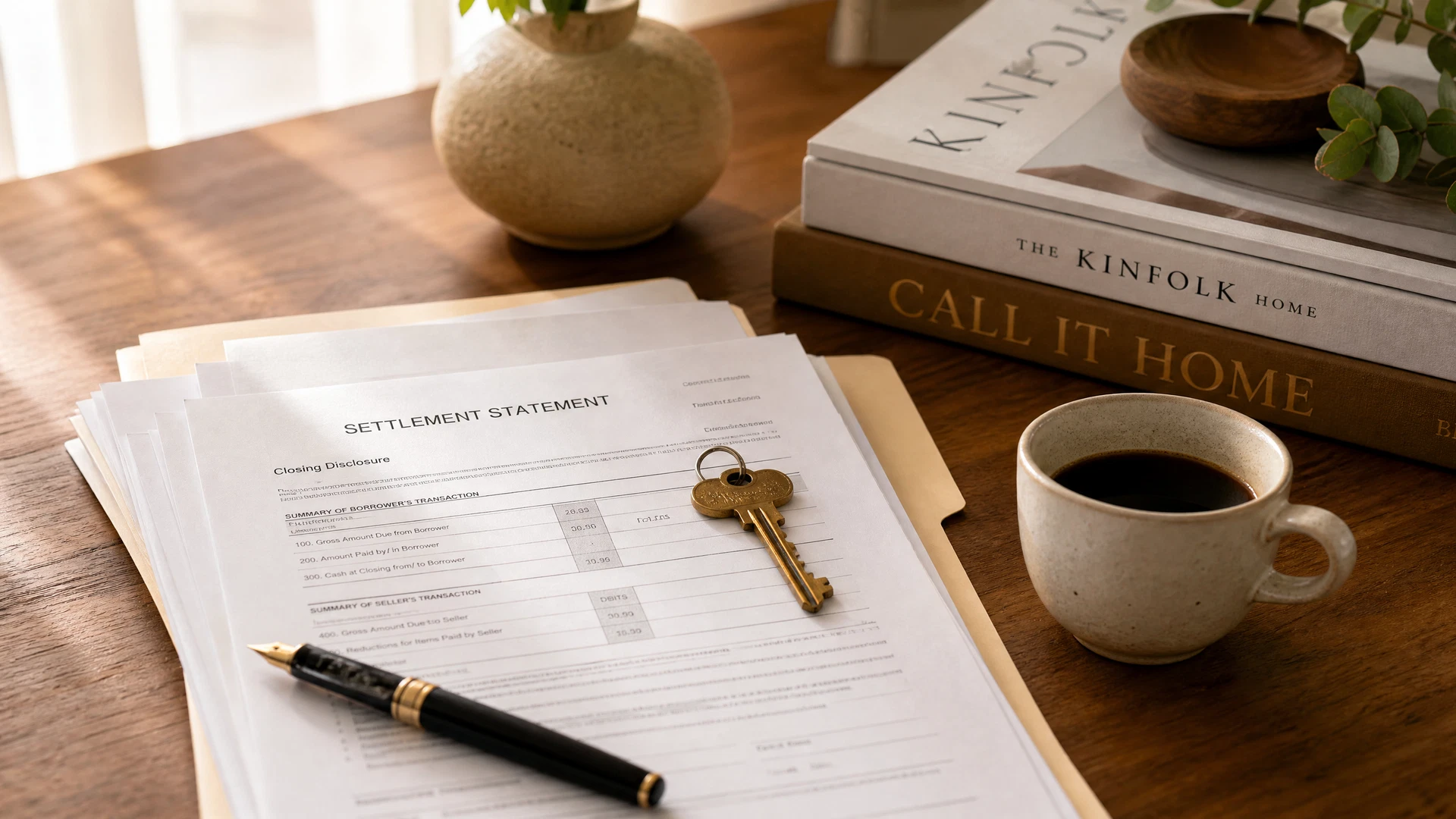
Closing costs are the fees on top of your down payment that you pay to finalize the purchase. In Massachusetts, a buyer should generally plan for roughly 2 to 5 percent of the purchase price, and knowing what is in that number helps you budget and spot anything that looks off.
Here is the short version. As a Massachusetts buyer you pay for your loan, your attorney, your title insurance, recording your mortgage, and prepaid items like insurance and taxes. One cost you usually do not pay is the transfer tax, the deed stamps, which in Massachusetts is the seller's expense. Many of these fees are negotiable, and you can ask the seller for a credit toward them.
Who this applies to
Any buyer purchasing in Greater Boston, especially first-time buyers who budgeted for the down payment but were surprised by the extra costs at closing. Planning for them early keeps your closing smooth.
What a Massachusetts buyer typically pays
Lender fees. Loan origination, points if you buy down your rate, the appraisal, and a credit report. These vary by lender, so compare loan estimates.
Attorney fees. Massachusetts requires an attorney for a real estate closing, so this is not optional. A buyer's attorney is commonly a flat fee, often in the range of several hundred to a couple thousand dollars depending on scope.
Title insurance. You usually pay for a lender's title policy, which protects the lender. An owner's policy, which protects you, is optional but worth considering, and who pays for it can vary by deal.
Recording fees. You pay to record your mortgage at the registry of deeds.
Prepaid and escrow items. Homeowners insurance, prepaid interest, and property tax escrow. These are not really fees, they are money you would owe anyway, collected up front.
What the seller typically pays
The big one is the Massachusetts transfer tax, the deed excise stamps, calculated at 4.56 dollars per thousand of the sale price. That is the seller's cost, paid by the party signing the deed, not the buyer. Sellers also typically handle recording the deed and pay off their remaining mortgage.
Buyer costs vs seller costs at a glance
| Cost | Usually the buyer | Usually the seller |
|---|---|---|
| Lender and loan fees | Yes | No |
| Attorney | Buyer's own attorney | Seller's own attorney |
| Lender's title insurance | Yes | No |
| Transfer tax, deed stamps | No | Yes |
| Recording the mortgage | Yes | No |
| Recording the deed | No | Yes |
| Prepaid insurance and taxes | Yes | No |
How to position yourself
Ask each lender for a written loan estimate and compare them line by line, since lender fees are where the biggest differences show up. Budget 2 to 5 percent of the price for closing costs on top of your down payment. And remember that in a market with a little more room, you can often negotiate a seller credit toward your closing costs, which lowers your cash to close.
The bottom line
A Massachusetts buyer should plan for about 2 to 5 percent of the price in closing costs, covering the loan, the required attorney, title insurance, recording, and prepaids. The transfer tax is the seller's cost here, and a seller credit can reduce what you bring to closing.
FAQ
Common questions, answered.
How much are closing costs for a buyer in Massachusetts?
Generally around 2 to 5 percent of the purchase price, though it varies with your loan and prepaid items.
Do I pay the transfer tax as the buyer?
Usually not. In Massachusetts the deed stamps, at 4.56 dollars per thousand, are the seller's cost. Everything is negotiable, but that is the norm.
Do I really need an attorney?
Yes. Massachusetts requires an attorney for a real estate closing, so plan for that fee.
Can I get help covering closing costs?
Sometimes. You can ask the seller for a credit toward closing costs, and some first-time buyer programs help too.
Monthly Market Recap
Get the Greater Boston market recap, once a month.
Prices, inventory, and what it actually means for buyers and sellers around Quincy and the South Shore.