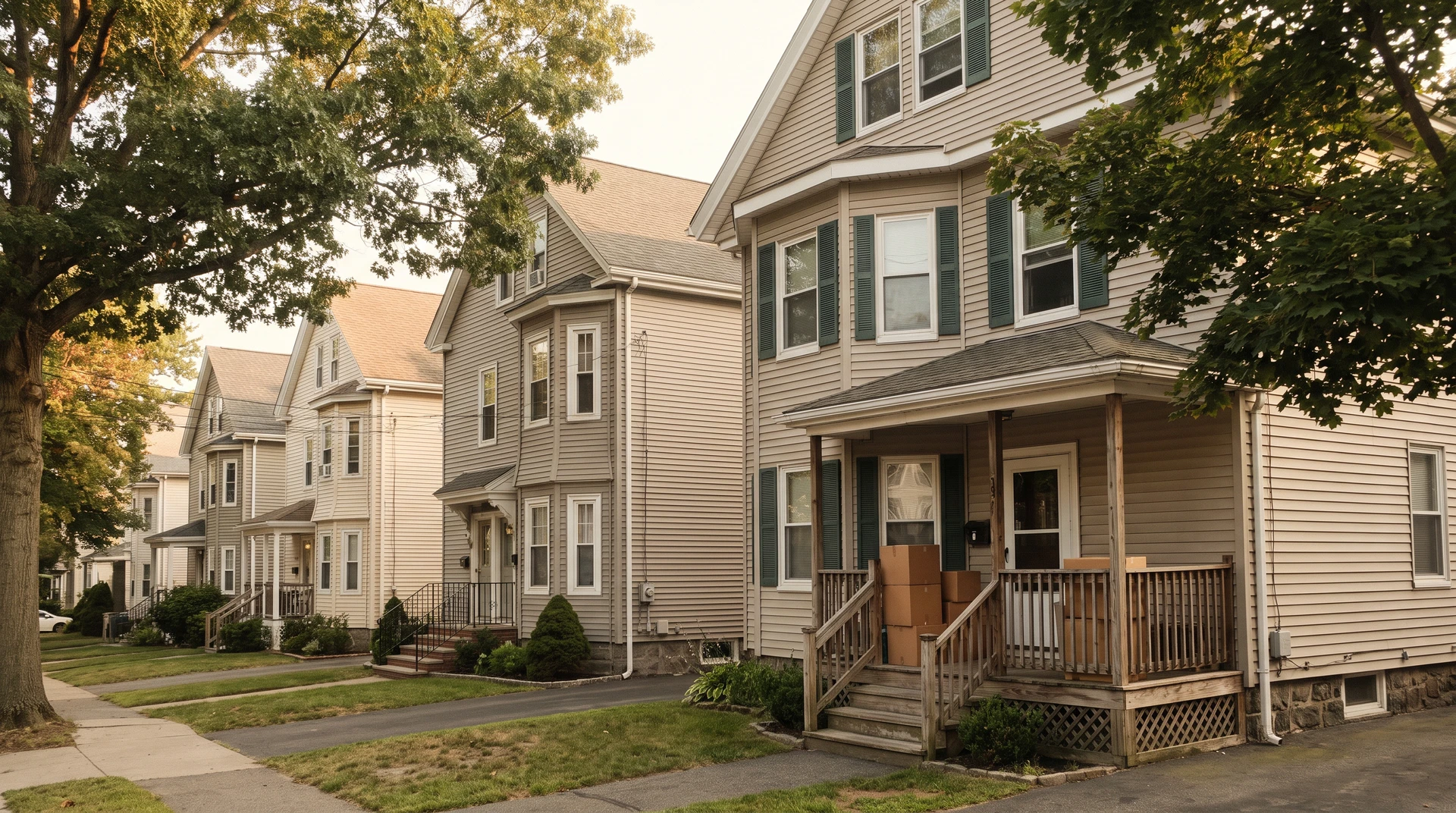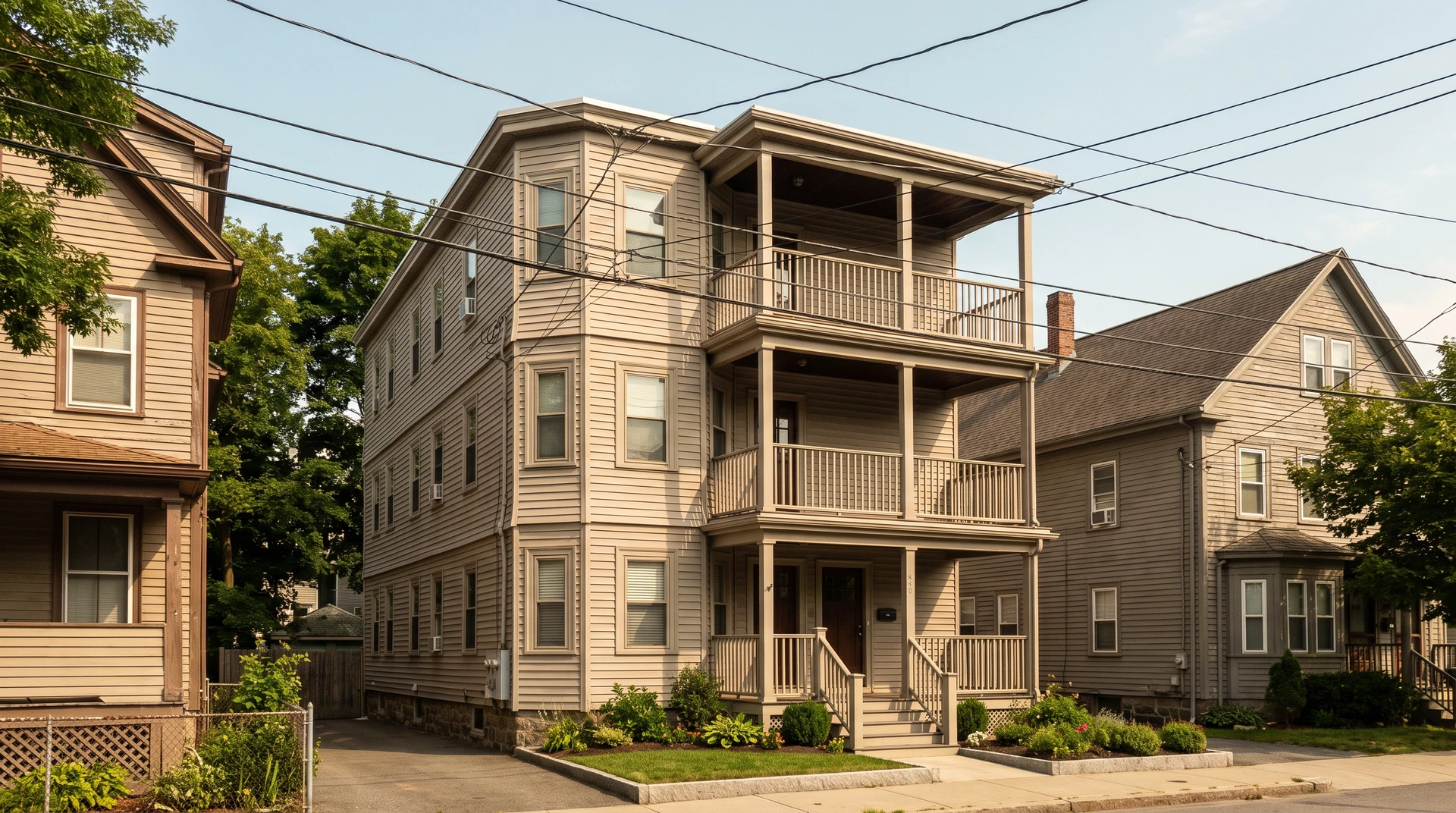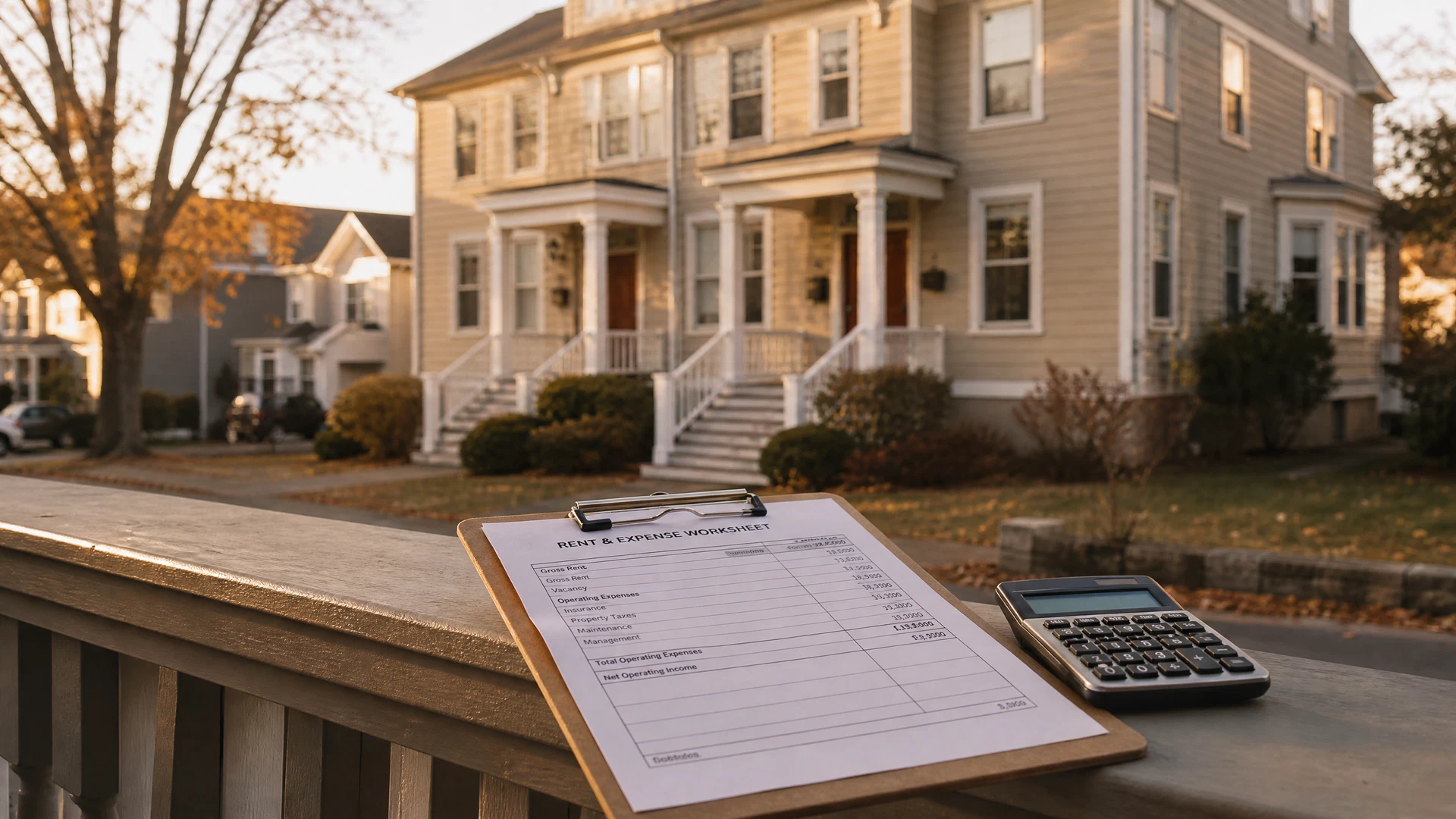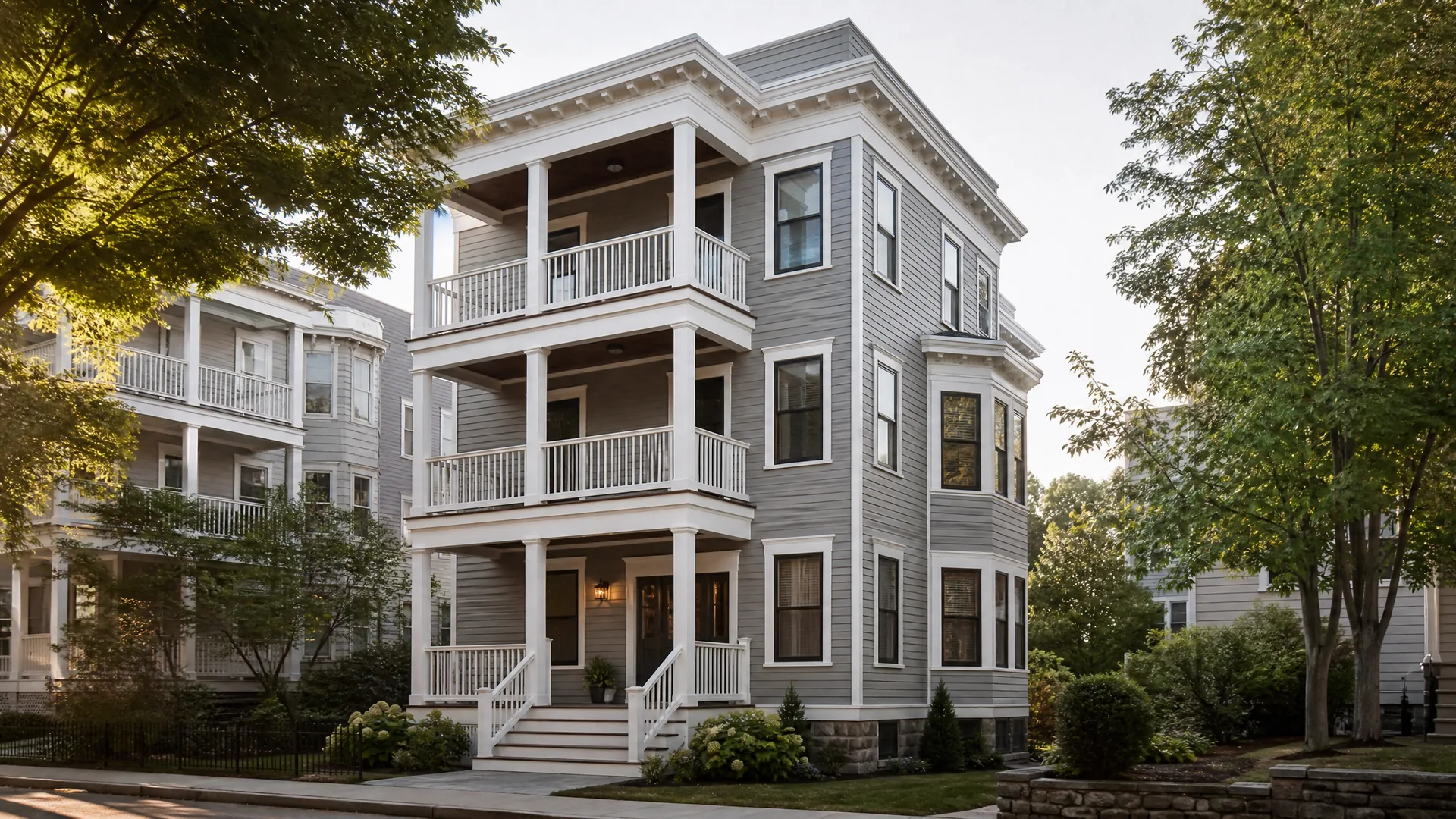
Greater Boston can be a good rental investment in 2026, but probably not for the reason most people expect. At today's prices and mortgage rates in the mid 6 percent range, the typical deal does not cash flow much on day one. The return comes from appreciation, loan paydown, and time, not from a big check in month one.
Here is the short version. Prices are high, rents are strong but not high enough to easily cover a high-rate mortgage on a market-priced building, and the South Shore has been one of the region's stronger performers this year. If you go in expecting instant cash flow, most deals will disappoint. If you go in with a long horizon and buy right, the fundamentals here are solid.
Who this applies to
First-time investors, house hackers, and owners thinking about a two or three family. It also applies to anyone weighing whether to keep an inherited property as a rental instead of selling it.
Why day-one cash flow is tight
The math is simple. When a building's price is high and the mortgage rate is in the mid 6s, the monthly payment eats most or all of the rent after taxes, insurance, and maintenance. That is the current reality across much of Greater Boston. It does not mean the investment is bad. It means you should underwrite it honestly and not count on income you will not have in year one.
Where the real return comes from
Appreciation. Greater Boston, and the South Shore in particular, has a long record of price growth, though never guaranteed.
Loan paydown. Your tenants help pay down your principal every month, building equity even when cash flow is thin.
Tax treatment. Depreciation and deductible expenses can improve your after-tax position. Talk to a tax professional for your situation.
Time. The longer your horizon, the more rent growth and paydown work in your favor.
What makes a Greater Boston deal actually work
| Factor | What to look for |
|---|---|
| Property type | Two and three families, where multiple rents support the building |
| Strategy | House hacking, living in one unit while renting the others |
| Location | Strong rental demand, near transit, jobs, and schools |
| Underwriting | Realistic rents, real expenses, and a vacancy allowance |
| Horizon | Long enough to let appreciation and paydown do the work |
How to position
Run conservative numbers before you offer, using realistic rents and full expenses including maintenance and vacancy. Favor multi-family or a house hack so more than one rent supports the building. And be honest about your timeline, since this is a long-game asset class in a high-price market.
The bottom line
Greater Boston rentals in 2026 are an appreciation and equity play, not a day-one cash machine. Underwrite honestly, buy a building the rents can support over time, and let the long horizon do the heavy lifting.
If you already own a rental and are questioning whether it still earns its keep, my guide on how to stress test a rental you already own runs the same numbers from the owner's side.
FAQ
Common questions, answered.
Will a Greater Boston rental cash flow right away?
Usually not much at today's prices and rates. Plan for thin early cash flow and returns that build over time.
What is the best property type for a first investment?
Often a two or three family, especially with a house hack, so multiple rents help carry the building.
How do I know if a deal is good?
Underwrite it with realistic rents, full expenses, vacancy, and your real financing. If it holds up conservatively and your horizon is long, it is worth a look.
Is the South Shore a good area for rentals?
It has been one of the stronger areas in the region this year, with steady rental demand. Location and price discipline still decide each deal.
Monthly Market Recap
Get the Greater Boston market recap, once a month.
Prices, inventory, and what it actually means for buyers and sellers around Quincy and the South Shore.